01 My role
Managing the team without taking over the work
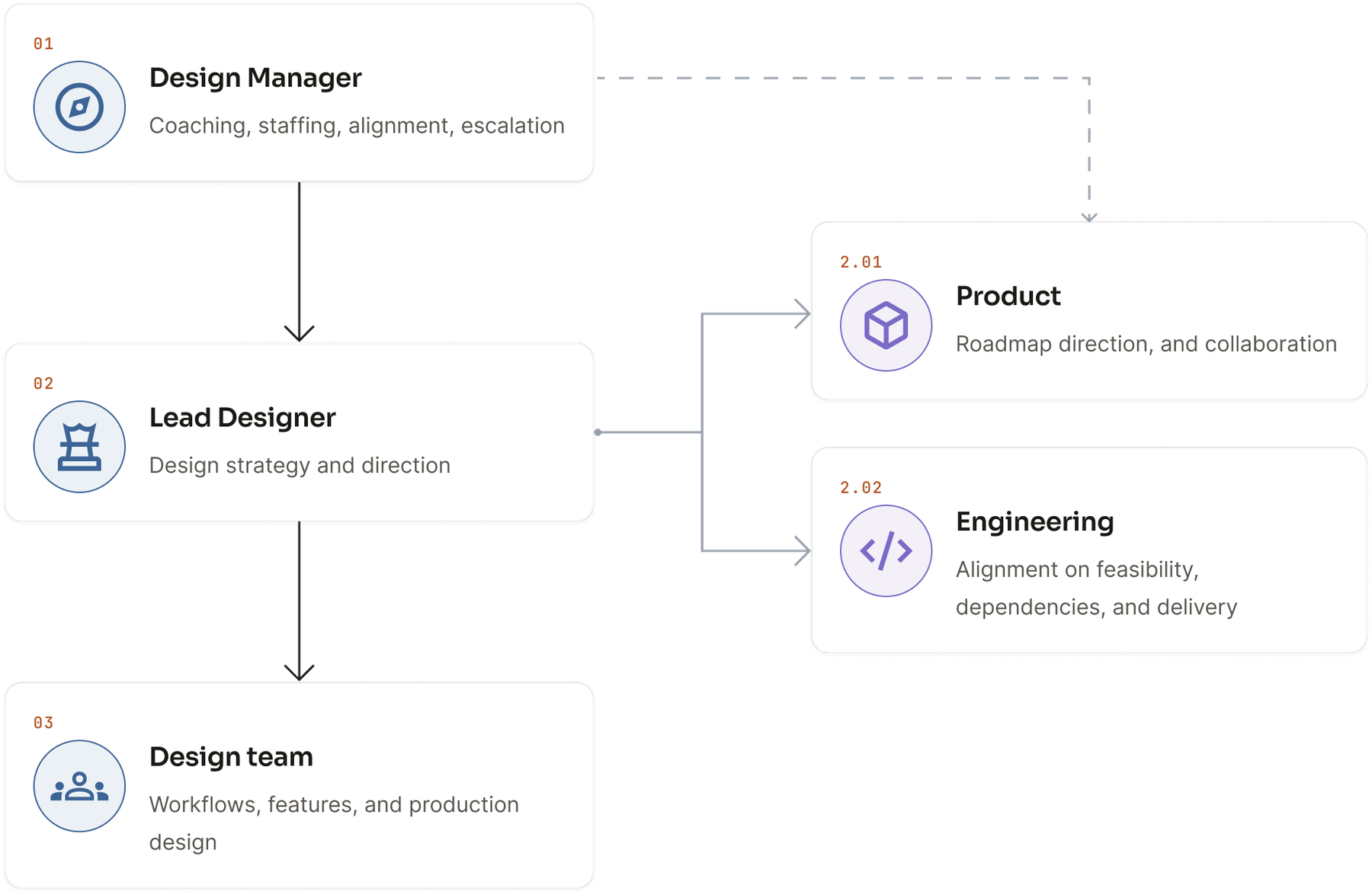
I managed the design team responsible for Celeste, Intapp’s agentic AI platform for professional services firms. The team included a primary Lead Designer who drove design strategy, with additional Lead, Senior, and Associate Designers supporting workflows, features, and production design.
My role was not to take over the design direction, but to give the Lead Designer room to lead while staying close enough to coach decisions, address staffing or ownership gaps, unblock cross-functional issues, and help the team remain coordinated as the platform moved from concept to launch.
02 What I did
Creating the operating rhythm around ambiguous AI work
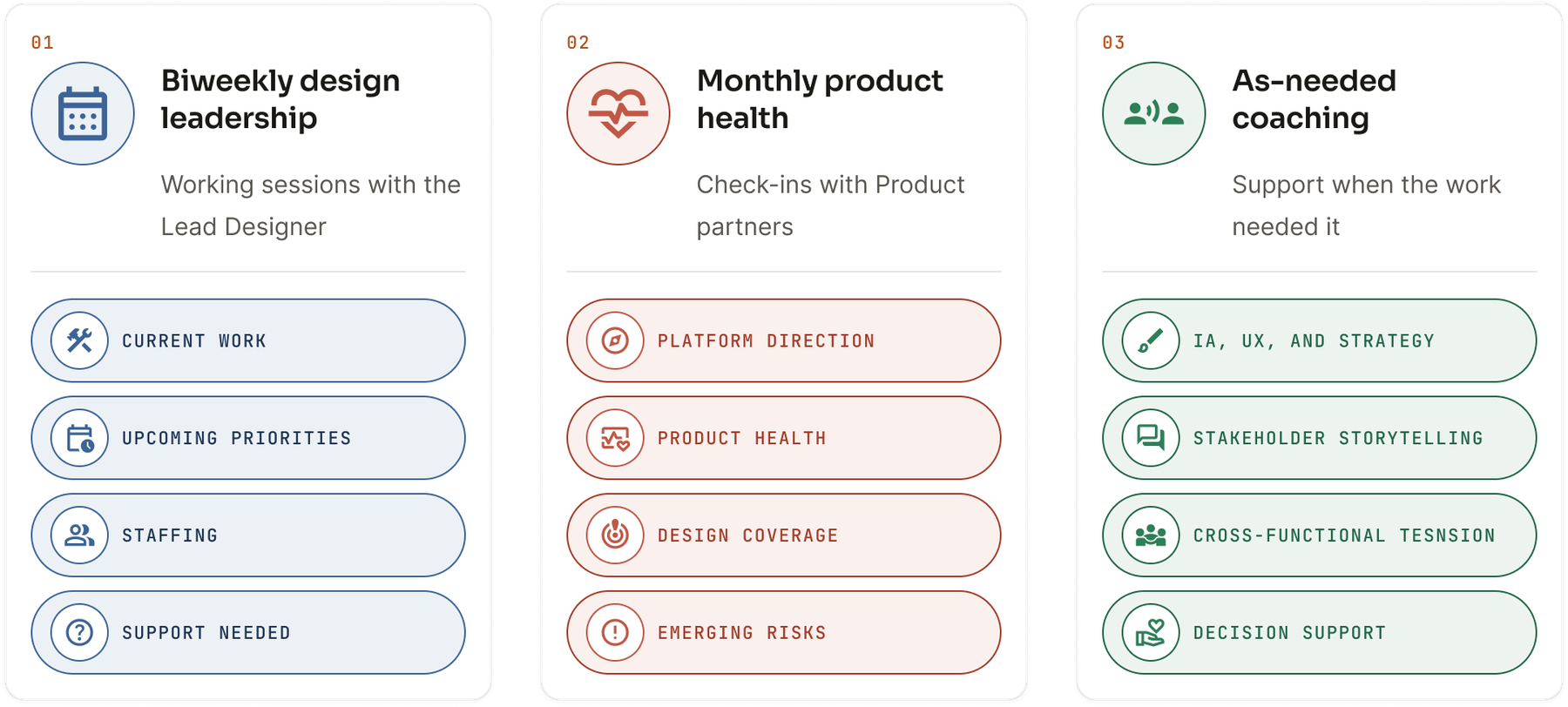
I created an operating rhythm that gave the Lead Designer autonomy while keeping design work connected to product direction, staffing needs, and cross-functional risks.
In biweekly conversations with the Lead Designer, we reviewed current work, upcoming priorities, ownership, staffing, and cross-functional support. I also met with Product partners monthly to understand product health, platform direction, and whether design had the right focus and coverage.
When designers needed help, I acted as a thought partner, discussing information architecture, interaction and UI decisions, stakeholder communication, and cross-functional tension. The goal was to help them clarify the problem and move the work forward without making the decisions for them.
03 Example
Making AI recommendations easier to understand and trust
The origination workflow uses Playbooks, or agents, to reduce manual analyst work by surfacing relevant signals, enriching CRM records, mapping relationships, and helping deal teams prioritize potential targets.
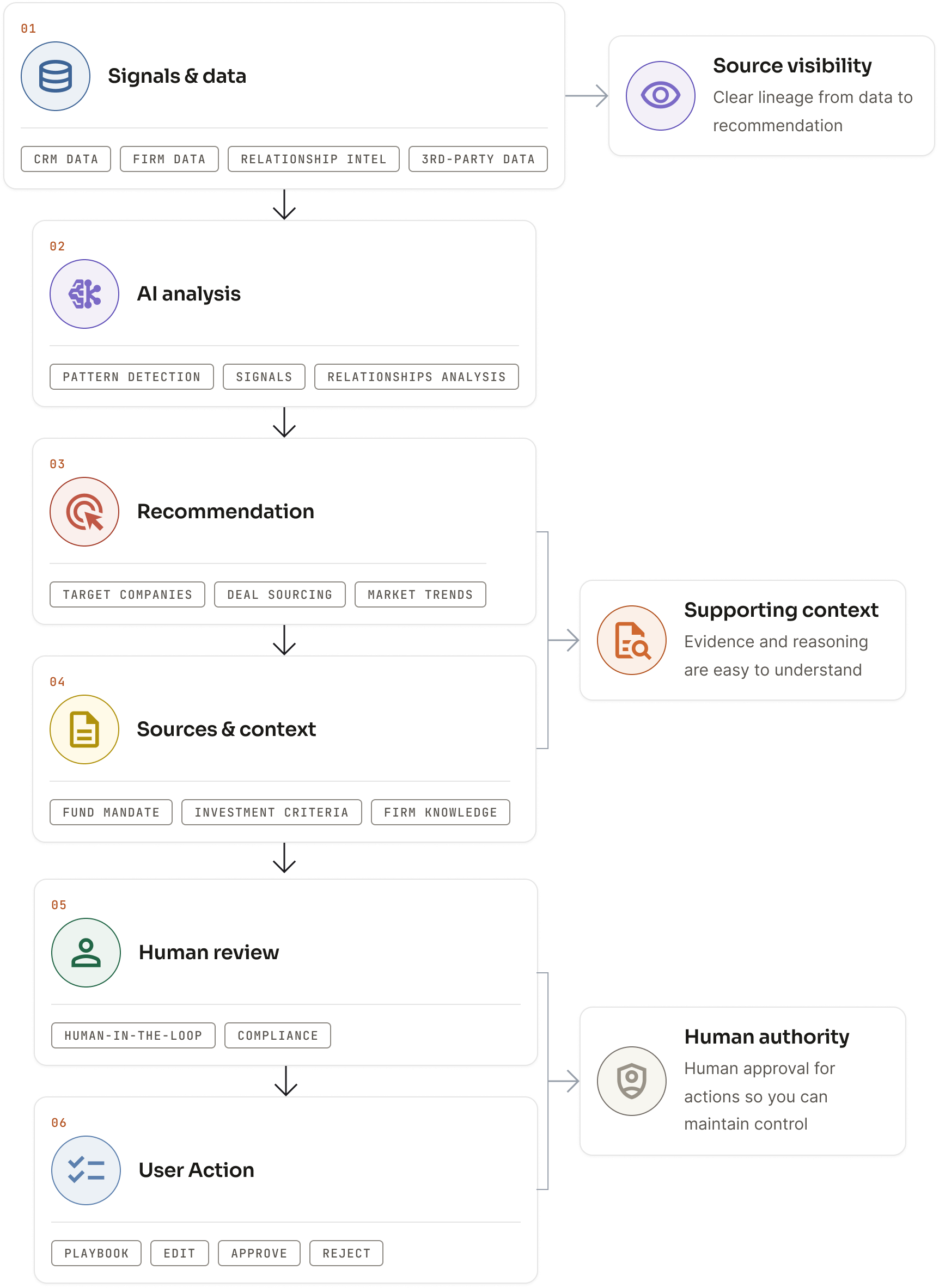
The harder design challenge was making the automation understandable and trustworthy. The workflow depended on DealCloud’s CRM data, firm data, third-party data sources, compliance data, and relationship intelligence. All of these factors played a role in the AI’s recommendation. Then the users needed to understand where the sources were coming from, why it made the recommendation, and use their judgment to pursue the deal.
The team made the agent’s work visible throughout the workflow. Users could trace recommendations back to their sources, inspect the supporting context, and understand what still required human judgment before taking action.
04 Outcome
Moving from an AI concept to launch
Celeste moved from concept to launch, with the deal origination workflow adding to the wider release effort.
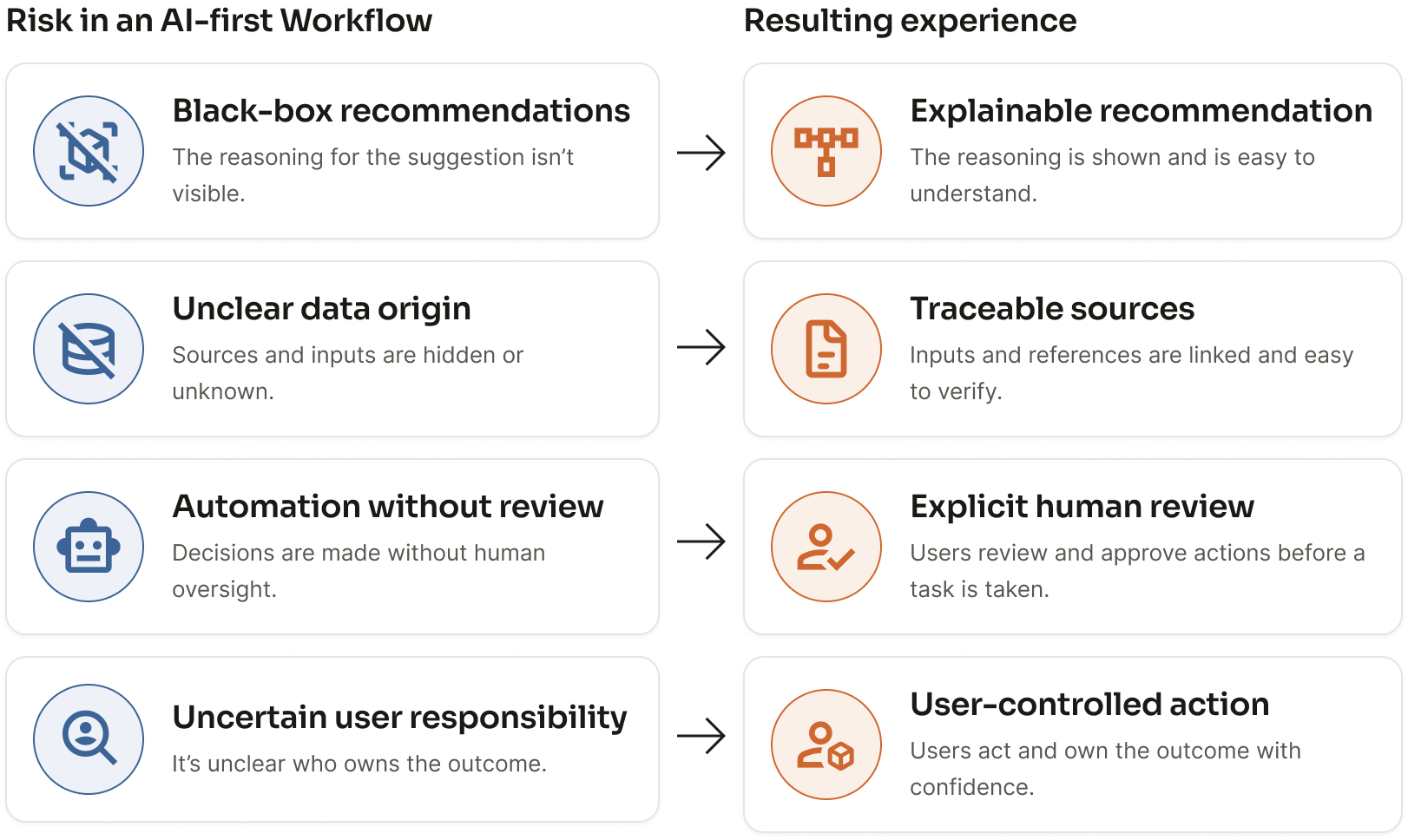
The design work made a complex agentic workflow clearer and more explainable. Users could see what the AI was recommending, understand the information behind it, and retain control over the final decision.
The leadership challenge was balancing autonomy with active support: giving strong designers room to shape the product while helping the team navigate trust, workflow clarity, and cross-functional alignment as the platform evolved.
Risk
Black-box recommendations
Result
Explainable recommendation
Risk
Unclear data origin
Result
Traceable sources
Risk
Automation without review
Result
Explicit human review
Risk
Uncertain user responsibility
Result