01 My role
Autonomy with active coaching
I was responsible for helping designers work more consistently by giving them autonomy, then coaching them in moments when judgment, communication, and cross-functional alignment mattered most. I believe designers need room to develop their own process, but they also need a manager who is close enough to coach, challenge, and step in when needed.
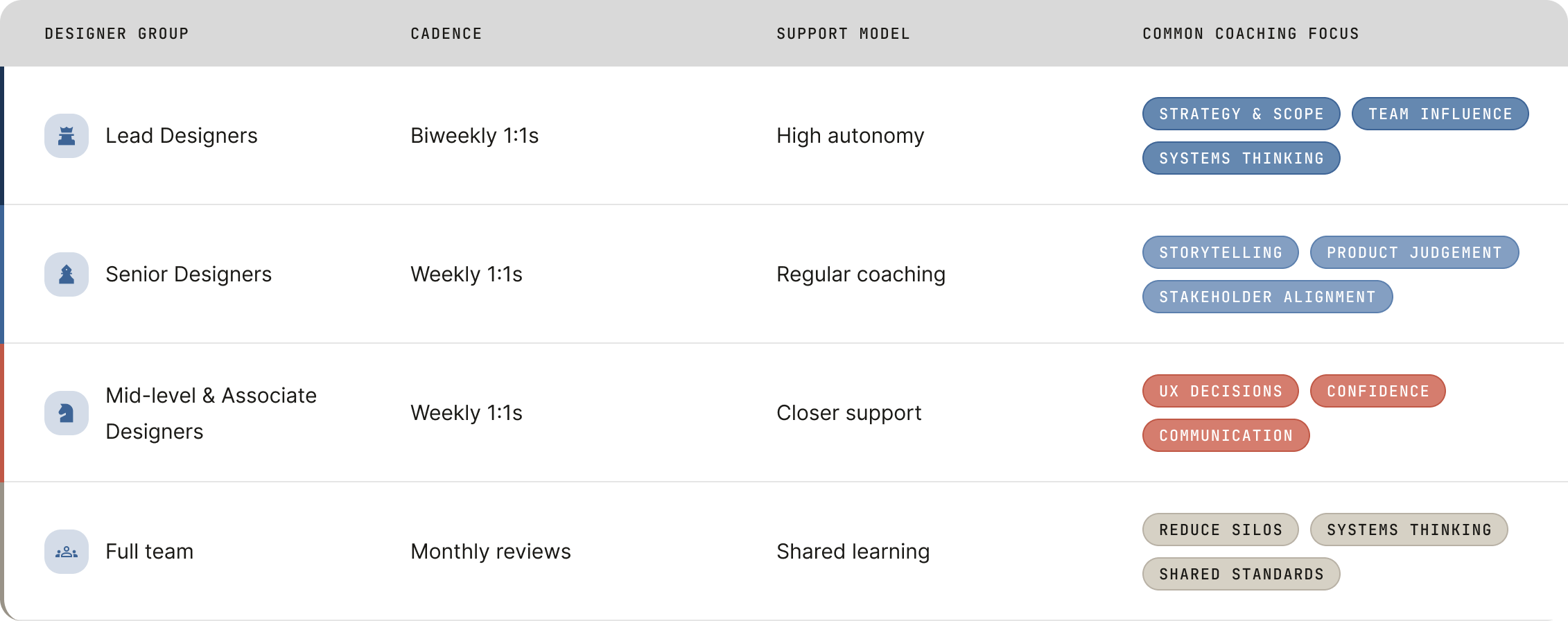
Swipe horizontally to view the full operating rhythm.
02 How I managed
Creating the right support structure for each designer
I tailored my operating rhythm based on each designer’s level and needs. Lead Designers generally had more autonomy and biweekly 1:1s. Senior, mid-level, and Associate Designers had weekly 1:1s, with additional design sessions when a project needed closer support.
I used those conversations to coach around:
- Product strategy and systems thinking.
- Stakeholder storytelling.
- PM and Engineering collaboration.
- UX and interaction decisions.
- Confidence and communication.
- Promotion readiness and career growth.
I also ran monthly team reviews where designers shared work across product areas. The goal was to reduce silos, help designers see patterns throughout the portfolio, and reinforce shared design judgment.
03 Example
Building confidence in stakeholder conversations
One Senior Designer I managed was strong but struggled with certainty and stakeholder presentations. We worked on a lightweight presentation framework:
- Clarify the problem
- Understand the audience
- Lead with the recommendation
- Make tradeoffs visible
- Prepare for likely questions
“Through our conversations, I built the confidence to present my work to stakeholders and stand behind my decisions in the room. His guidance made me a stronger designer and a better collaborator across the team.”

04 Outcome
The impact showed up in how designers operated
Designers raised stronger strategy and systems questions earlier and presented their work with more clarity. Cross-functional partners trusted them and wanted them embedded in their product areas. Designers also took on larger scope; one Senior Designer was promoted into a Lead Designer role, and another showed visible improvement in stakeholder confidence and presentation clarity.
This is the kind of management I try to practice: give designers trust, coach the important moments, and help them build the judgment to operate with more confidence.